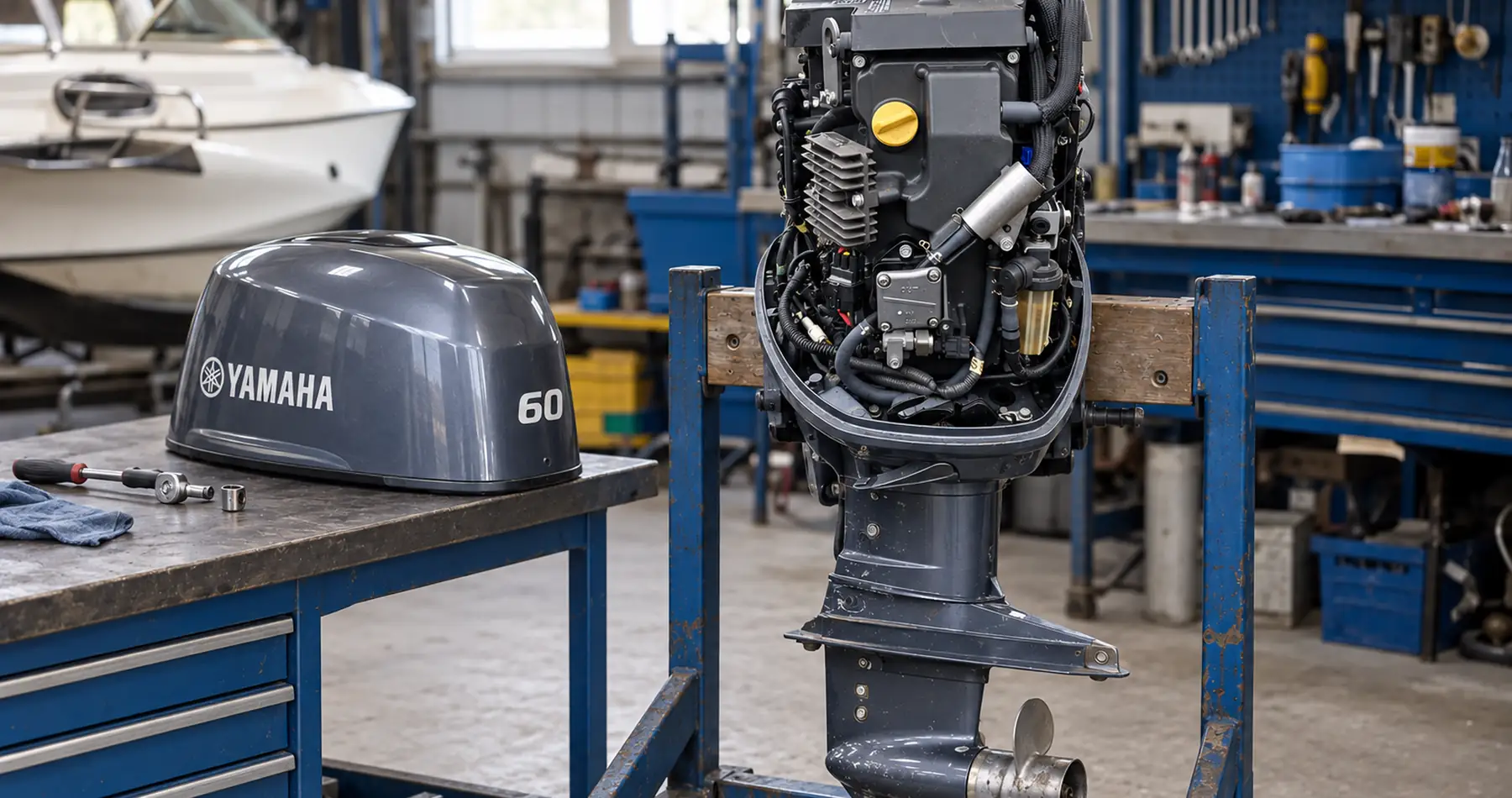
Start with a proper diagnosis
Before any decision, find out what is actually wrong. A refusal to start can be a fuel line, a battery, an impeller or a spark issue — cheap, well-understood work. It can also be compression loss, corrosion in the powerhead or water where water should not be, which is a different conversation entirely.
Pay for the diagnosis if you have to. Deciding the fate of an engine without knowing which of those two situations you are in is how owners end up spending more than the engine is worth.
Compare the full cost, not the first repair
Ask the workshop two questions: what does this repair cost, and what else is likely within the next two seasons? On an engine of a certain age the honest answer is usually a list, not a single item — impeller, thermostats, seals, corroded fasteners, an ageing gearbox.
Then compare that total against two other numbers: what a similar working engine costs to buy, and what your engine is worth as it stands. If the repair total approaches the price of a sound replacement, repairing is rarely the better deal.
Repairs that restore reliability for a modest share of the engine's value are usually worth doing. Repairs that cost a large share of a replacement — or that come with a list of likely follow-ups — usually are not.
Warning signs that change the calculation
- Water in the oil or the cylinders. Often the end of the road for an older engine.
- Low or uneven compression. Powerhead work is the most expensive category there is.
- Heavy corrosion in the mid-section, transom bracket or under the cowling. It never gets better, and it makes every future job harder.
- Discontinued parts. If the parts supply has dried up, one unlucky failure ends the engine regardless of how good the rest of it is.
- Repeated overheating with no clear cause found.
- A repair history you cannot verify. Work done "by a friend" with no receipts is worth little to a buyer and tells you little about condition.
Think about the whole boat, not only the engine
An engine repair rarely stands alone. If the hull is tired, the trailer needs work and you use the boat three weekends a year, a large engine bill may be the moment to look at the whole package instead. Conversely, a sound boat you genuinely use can justify an engine investment that would make no sense on a boat you have stopped enjoying.
The same question runs the other way too: sometimes the engine is the valuable part and the boat around it is not. Engines can be sold on their own, and a good outboard on a tired hull is often worth more separately than together.
Selling an engine that does not run
A non-running engine is not worthless. Powerheads, gearboxes, lower units, controls and electronics all have a market, and a complete engine — even seized — is worth more than the sum of parts pulled from it. Do not dismantle it before getting an offer.
What helps a buyer price it: model, year, serial number, hours if you know them, what it did before it stopped, and what work has been done. Photos of the powerhead, the lower unit and the serial plate are worth more than any description.
If you decide not to repair
BoatsHaven buys boat engines in any condition, including engines that do not run and engines bought for parts — with or without the boat. Send the details and you have a concrete number to compare against the repair quote, at no cost and with no obligation.
If the boat has reached the end of its life too, it is worth checking the value of the whole package first — scrappage and disposal should be the last step, not the first.