The short answer
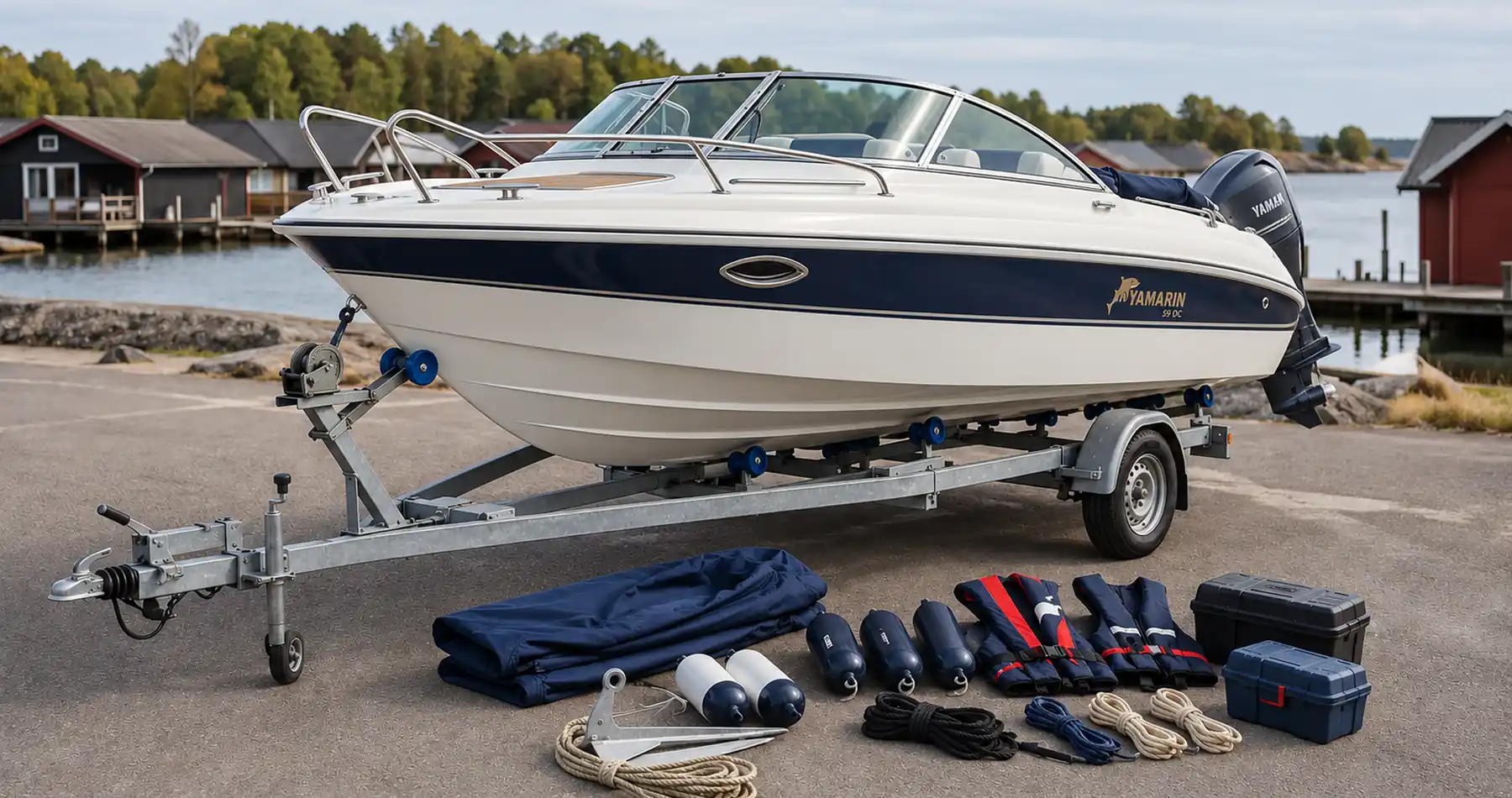
Yes — and in most cases it is the better way to sell. A boat, its engine, a road-legal trailer and the equipment that goes with them are worth more as a working set than as separate lots, because the buyer can collect the boat and use it without sourcing anything else.
It also removes the problem you would otherwise be left with: a trailer with no boat on it, or a cabin full of gear nobody wants to ship.
What belongs in the description
- The boat: make, model, year, length and the identification details you have.
- The engine: make, power, year, hours and known service history.
- The trailer: make, permitted weight, registration status, inspection status, tyre and bearing condition.
- Equipment: electronics, covers, anchors, safety gear, spare propeller, keys.
- Exclusions: anything you are keeping. Say it in the listing, not at handover.
The boat on the water sells the dream; the trailer plate, the serial plate and the equipment laid out on a tarpaulin sell the deal. A buyer should be able to see exactly what is included before making an offer.
Do extras always increase the price?
No. Useful, compatible, working equipment does — a trailer that is legal to tow, electronics that switch on, safety gear still in date, a cover that fits. Old, broken or expired items add nothing and can even work against you, because they suggest a boat that has been left to itself.
The most valuable extra by a wide margin is the trailer. It makes the boat collectable by one person with a car, which widens the buyer pool more than any electronics package.
When selling separately makes sense
A nearly new outboard, a high-capacity trailer or specialist electronics can have their own market, and occasionally a strong one. Weigh it honestly: several separate sales mean several listings, several sets of questions, several viewings and several collection arrangements — and a boat left without a trailer is noticeably harder to sell.
A reasonable compromise is to sell the package as the main offer and mention that individual items are available separately if the buyer does not need them.
What to do with equipment nobody wants
Most boats come with a locker of things that will not add a cent: expired flares, a cracked cover, an anchor for a different boat, half a tin of antifoul. Sort it before the photos. Anything broken or out of date is better removed than explained, and anything genuinely useful — a spare propeller, a working chartplotter, fenders in good condition — deserves its own line in the inventory rather than being lost in a pile.
Personal items are a separate matter: take them out before the first viewing. A buyer looking at a cabin full of someone else's belongings is looking at a project, not a boat.
An honest inventory protects you
Write the list once, keep it with the contract, and hand over exactly what it says. Most disputes after a boat sale are not about the hull or the engine; they are about a missing cover, a second set of keys or an item the buyer believed was included. A one-page inventory signed by both sides removes that entire category of argument.
Trailer paperwork
A boat trailer is a road vehicle. In most countries ownership passes through the road authority rather than any boat register, and the plates, permitted weight and inspection status matter to the buyer. Include the trailer explicitly in the sale contract with its own details — not as "and trailer".
Selling the whole package to us
BoatsHaven buys boats together with engines, trailers and marine equipment, including packages that need work. A trailer or a single piece of equipment can also be sold on its own. Send an inventory and photos of the boat, engine and trailer, and read up on the contract and documents so the handover is clean whichever route you take.
One more reason to sell the set together: whatever you keep back still has to be stored, moved or disposed of by you. A package sale ends the whole job in one step.